












 Database Development








































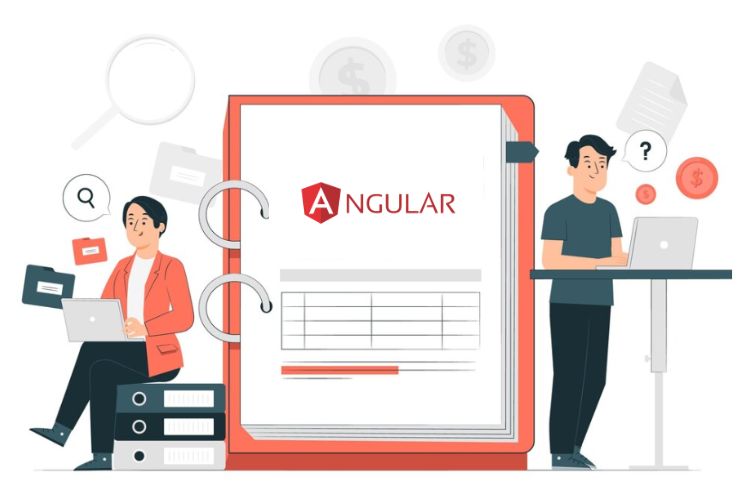
Delivering high-quality, error-free applications is increasingly critical in today’s fast-paced development climate. While Angular’s architecture and scalability provide a solid foundation for creating high-quality applications, the challenge of maintaining an application and ensuring it is functioning properly only increases as the application grows in size and complexity. This is where Cypress end-to-end (E2E) testing becomes extremely helpful. Cypress has emerged to become one of the most widely used and trusted tools to test modern web applications, providing an easy-to-use API, real-time refreshing, and powerful debugging tools.
This blog post will cover how Cypress can be used to help improve Angular projects, what features make Cypress popular among developers, and what best practices should be followed when using Cypress to create production-level applications.
What is End-to-End (E2E) Testing in Angular?
E2E testing checks the complete workflow of any application, from the user interface through to the backend and database. E2E tests, unlike unit tests, do not validate the functioning of a single component. Instead, E2E tests simulate a user’s interaction with an application, ensuring that:
- Features operate as expected.
- Pages are opened as expected.
- Buttons/forms/navigation operate as expected.
- APIs return the expected results.
- Users have an overall positive experience and do not encounter errors.
For Angular applications using components to create a dynamic user interface, E2E testing is essential to provide a reliable application across multiple environments.
Reasons To Use Cypress For Angular E2E TESTING
Cypress is one of the best tools for accomplishing modern testing due to its speed, ease of use and large number of advanced features. Below are the main reasons why Cypress has become the most popular tool used by developers who develop applications using Angular:
Firstly, the fact that Cypress runs inside of the browser allows it to have direct access to all the DOM elements. Therefore, Cypress executes faster and has significantly fewer flaky tests than traditional tools such as Selenium.
Every time you make a change to your Angular application and perform a save operation in Cypress, it will automatically reload your application. Furthermore, due to the interactive GUI that is included with Cypress, you can easily:
- View test step execution in real-time.
- Access DOM snapshots.
- Debug the failed test immediately after it has failed.
Thirdly, the JavaScript syntax that is used by Cypress is very easy-to-learn and will therefore be familiar to most Angular developers because they already work with TypeScript and JavaScript.
Finally, Cypress provides you with the complete testing automation ecosystem – including a test runner, a dashboard service, network request stubbing, and the ability to create screen shots and videos, all without requiring you to install any other plugins.
Benefits of Using Cypress in Angular Applications
Cypress is a popular testing tool for Angular apps that provides many benefits for these types of applications.
Cypress allows for accurate UI interaction testing through its automated waiting feature. This feature allows Cypress to automatically wait for specific events to occur before proceeding with the test execution. As a result, false failures due to failed DOM tests caused by Angular’s dynamic rendering are virtually eliminated with Cypress.
In addition to providing automated waiting, Cypress also provides:
- Automated waiting for Page Load
- Automated waiting for API Responses
- Automated waiting for DOM Elements
- Automated waiting for Animations to complete, therefore eliminated manual sleep/wait commands.
Another benefit of using Cypress is that it’s easy to set up, whereas using Selenium requires complicated driver/grid configurations. So once you install Cypress, you are ready to test!
Cypress provides a variety of different ways to assist in debugging. Some of the ways include video recordings of tests, screenshots of test failures, and real-time logging of what is occurring during the execution of the tests.
How Cypress Enhances Angular Development Workflow
When using Cypress to test an Angular project, it simplifies the way testing is conducted within that project. Here are two ways Cypress simplifies the workflow:
1. Cypress integrates easily with the Angular CLI.
Cypress can be easily added to existing Angular projects using community tools or custom configuration. Once integrated, you have a powerful E2E system aligned with your build and deployment pipeline.
2. Continuous Integration Support
Cypress runs smoothly on CI/CD pipelines like:
- GitHub Actions
- GitLab CI
- Jenkins
- Bitbucket Pipelines
- Azure DevOps
3. Improved Team Collaboration
Since Cypress tests are easy to write and understand, both developers and QA engineers can contribute. This leads to:
- Faster bug detection
- More stable releases
- Better team productivity
Common Challenges in Angular Testing and How Cypress Solves Them
Angular developers deal with the following common problems:
Asynchronous rendering issues.
Cypress automatically handles waiting for the stability of the DOM.
Tests that are sensitive to randomization due to changing data.
Cypress has an automatic retry feature that fixes most flaky tests.
Trouble debugging tests that fail.
Cypress takes snapshots of the DOM and makes the process of debugging easier and quicker.
Complex when testing APIs.
Cypress can intercept, change, or duplicate requests to APIs in an easy way.
In conclusion
End-to-end testing ensures that your Angular application functions as anticipated by the user. Cypress offers a fast, user-friendly, and powerful end-to-end testing solution from writing tests to debugging failures. It’s the automated wait times that help you succeed in the testing arena today by combining Cypress’s powerful ecosystem and integration with every browser in the world.
By incorporating Cypress into your Angular workflow, your code quality will improve, which ultimately leads to a better user experience and ensures that your application is stable as it continues to grow in size and complexity. No matter which type of application is being built — from small components to large enterprise-level applications — Cypress enables you to build reliable applications with minimal errors.
Contact Us Today