










 Database Development





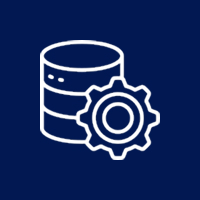

























Cloud computing has changed the way that businesses work, enabling organizations to expand, innovate, and deliver services more quickly than ever before. Instead of relying on conventional on-premises servers, organizations are now leveraging the cloud for data storage, application deployment, and on-demand computing resources. Whether you are a startup or an enterprise organization, cloud computing is now a requirement for staying competitive in the new digital-first world.
What is Cloud Computing?
Cloud computing is basically the delivery of computing services – Servers, storage, databases, networking, software, analytics and AI – over the Internet (“the cloud”). Using this model, users can access the resources and use them when they need them, without having to worry about physical IT resources.
- Infrastructure as a Service (IaaS): This model provides virtualized computing resources such as server and storage. Example – AWS EC2, Microsoft Azure, Google Compute Engine
- Platform as a Service (PaaS): This model provides a platform to allow developer to build, test and deploy applications. Example – AWS Elastic Beanstalk, Heroku
- Software as a Service (SaaS): This model provides software applications over the Internet and on a subscription basis. Example – Google Workspace, Salesforce
Benefits of Cloud Computing
- Scalability: Quickly increase (or decrease) capacity based on needs with no significant up front cost.
- Cost Effectiveness: Pay for usage, instead of paying an upfront cost.
- Accessibility: Ability to access applications and data from anywhere at any time from any device.
- Security: Major cloud service providers come with built in encryption, compliance and monitoring tools.
- Disaster Recovery: Data is stored in the cloud and can be restored quickly, as well as being backed up.
- Speed of Innovation: Developers can deploy new features faster with a cloud based environment and automation.
Cloud Deployment Models
- Public Cloud: Resources owned and managed by a third-party provider, such as AWS, Azure, or Google Cloud.
- Private Cloud: Cloud resources for a single organization, for more control and customization.
- Hybrid Cloud: A mixture of both public and private environments that allows for flexibility, optimization of costs and security.
- Multi-Cloud: Using services from multiple providers to avoid vendor lock-in and enhance redundancy.
Cloud Service Provider Leaders
- Amazon Web Services (AWS): The most comprehensive and widely used cloud platform.
- Microsoft Azure: Allows for seamless integration with Microsoft products and enterprise-level tools.
- Google Cloud Platform (GCP): Well known for strong artificial intelligence, data analytics, and machine learning capabilities.
- IBM Cloud & Oracle Cloud: Well known in enterprise and hybrid cloud deployment models.
Cloud Security and Compliance
Security remains one of the foremost concerns related to cloud adoption. Current cloud providers have enacted multi-layered security protocols, which now include:
- Identity and access management (IAM) processes.
- Data encryption in flight and at rest.
- Frequent security assessments and compliance alliances (ISO, GDPR, and SOC 2).
Organizations are also utilizing a more robust approach to cloud security called a Zero Trust architecture that validates every access request.
Emerging Cloud Trends
- Edge computing, or bringing compute workloads closer to the end-user to minimize latency.
- Serverless architecture, which is running code without having to manage the server and the associated costs to run it as well as complexities.
- Integration of AI and Machine Learning in cloud computing, as cloud providers now offer AI-as-a-Service type solutions for automation and analytics capabilities.
- Sustainability, as cloud providers are investing in green data centers as well as carbon neutral operations.
- Multi-cloud strategies, as clients are increasingly utilizing multiple providers to maximize reliability and flexibility.
Conclusion
Cloud computing is the backbone of the new paradigm of digital transformation. Organizations ranging from startups to large global organizations are leveraging cloud computing to minimize time to innovate, enhance their security posture, and drive operational efficiency. As cloud technologies evolve, so does their ability to improve industries and power the next generations of computing.
Whether you are migrating existing workloads to the cloud or developing cloud-native applications, leveraging cloud computing is a way to continually deliver agility, resilience, and future-centered success in a constantly changing technology era.
Contact Us Today