











 Database Development


































In our connected world, internet of things (IOT) and real-time data applications are a necessity for industries from smart homes and health care to logistics and manufacturing. These are reliant on fast data transferring between devices, sensors, and servers, which is where node.js will be a game changer.
Node.js event-driven architecture and non-blocking I/O model provide the speed, scalability, and flexibility that is needed for massive data flows and real-time communication associated with IoT.
1. Why node.js for IOT and real-time applications?
Node.js is built on Chrome’s V8 JavaScript engine, which is created for low-latency and high performance. Node.js also has a highly scalable architecture which is key for supporting many concurrent connections, which we see in IoT systems.
The main points of node.js being the best solution for IoT and real time applications are:
- Asynchronous processing: Node.js can manage multiple operations at once and does not block other processing while doing these other operations – this is vital when managing thousands of connections to IoT device management.
- Lightweight and Fast: Node.js lightweight runtime is ideal for low-cost IoT devices that are constrained by resources.
- Cross-platform compatibility: Node.js runs across multiple different operating systems or hardware architectures without issue.
- Large Ecosystem: With npm (Node Package Manager), developers can access thousands of ready-to-use libraries and tools to accelerate IoT development.
2. Node.js for Real-Time Data Handling
Real-time applications require fast data transmission and event-driven updates. With its WebSocket support and asynchronous qualities, Node.js allows data to flow continuously through clients and servers.
Common applications include:
- Real-time dashboards to monitor sensor data
- Live tracking systems (e.g. delivery and fleet management)
- Instant alerts and notifications (e.g. exceeding a temperature threshold or motion detection)
- Chat and collaboration systems
Frameworks like Socket.io and MQTT.js makes it easy for developers to create real-time, bidirectional communication using Node.js.
3. Node.js in IoT Ecosystems
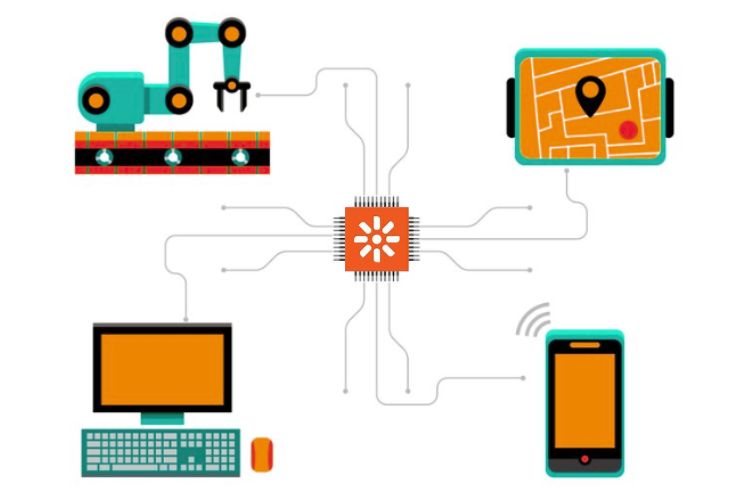
In IoT contexts, Node.js often serves as middleware or the central application in an architecture that allows IoT devices to connect to cloud servers and data analytics layers.
Common use case architectural pattern:
- IoT devices collect data and send updates (e.g. temperature, motion, etc.)
- Node.js server receives, processes, and passes data through
- Cloud systems/databases store and analyze data
- Dashboards or applications visualize data in real-time applications
Node.js is compatible with IoT protocols such as MQTT, CoAP, and HTTP, and helps to connect devices and sensors across various IoT platform.
4. Benefits of Utilizing Node.js in Developing IoT Systems
Here are the advantages Node.js provides for IoT and real-time applications:
- Scalability: The platform can manage thousands of parallel connections with devices without losing responsiveness.
- Energy Efficiency: It demonstrates low resource usage, making it energy-efficient for devices targeting low consumption.
- Speed and Performance: The event driven platform offers low latency and quicker performance because data is handled asynchronously.
- Cost-Effective: Node.js allows you to stay within a single language (JavaScript) across both the client and server, decreasing complexity in development.
- Strong Community: The platform is ever-evolving with new frameworks, plugins, and contributions through a strong community of developers worldwide.
5. Examples of the Real-World Expansiveness of Node.js
Node.js development is applied already in many IoT and other data-centric use cases such as:
- Smart Home Systems for connecting & controlling appliances, lights, and smart sensors.
- Fleet Tracking applications for monitoring vehicles simultaneously using GPS and service analytics dashboards.
- Industrial Automation to collect sensor data from machines for predictive maintenance.
- Healthcare monitoring systems for data from wearable’s and history’s tracking patient systems.
6. Best Practices for Developing Node.js IoT Applications
When developing applications for IoT and other real-time systems provide the algorithms and protocols layer in response to changing energy consumption, it is suggested to consider design patterns as best practice behaviors:
- Use MQTT for lightweight communication protocols between devices.
- Cache and message queuing, (ex. Redis or RabbitMQ) can be used to supplement processed and accumulated data.
- If appropriate consider microservices to develop independent calls and transformations about components even in serverless.
- Ensure data security and implement encryption and authentication protocols.
Continue monitoring performance and exception handling to avoid downtime.
Final thoughts.
Node.js eclipses the way developers are building real-time and IoT solutions. Its event-driven architecture, ability to scale, and speed makes it a robust application development framework/too for handling money of devices connections and live data stream events efficiently.
As IoT will continue to permeate industries and usages, leveraging Node.js will facilitate business to build, systems that respond quickly, reliably, and are future-ready to meet modern day data needs.
Contact Us Today